Occupy L.A. Protesters Arrested, Camp Razed

The night began with Occupy L.A. protesters singing, dancing and chanting. But the festive mood changed as the LAPD swooped down on the City Hall encampment. In the end, nearly 300 people were arrested and the grassy park was cleared. I was one of a number of Times reporters who witnessed the events unfold as we blogged, Tweeted and shot photos and video footage at the scene.

I produced the video above from footage I shot during a period of several hours that ended when police quashed the protest in the early morning hours on Nov. 30.

Bell Coverage Wins Pulitzer Prize

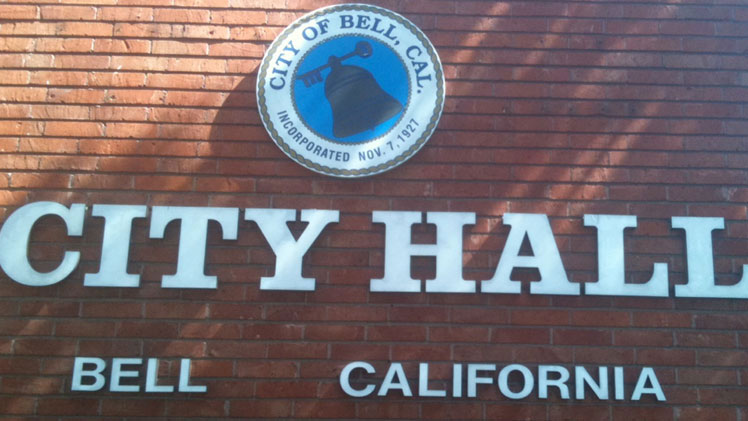
Bell City Hall
Bell is one of the poorest cities in L.A. County. Photo: Robert J. Lopez

I was part of a team of 20 Los Angeles Times reporters and editors, led by Jeff Gottlieb and Ruben Vives, that was awarded the 2011 Pulitzer Prize gold medal for public service. Our series of articles exposed how top officials in Bell, one of the poorest cities in Los Angeles County, enriched themselves with extraordinary salaries and benefits while illegally raising taxes on residents and resorting to other legally questionable schemes to raise revenue. The stories resulted in criminal charges against eight former officials and new disclosure laws in cities and counties across California.

The story was broken by Gottlieb and Vives, who first reported the high salaries in summer 2010. I became involved with Paloma Esquivel and wrote two investigative articles, both of which were submitted as part of the Pulitzer package. The articles revealed how city officials raised revenue from questionable tactics such as arbitrary fees on small business owners and seizing vehicles and property of people who allegedly violated municipal codes. Both pieces featured stories of residents who were victimized and relied on numerous public records. Here they are:

Bell Codes a Cash Cow
Bell officials demanded arbitrary fees from some business owners

Sheriff Agrees to Limited Viewing of Ruben Salazar Files

Eight boxes of files on the slain journalist. Photo: Robert J. Lopez

Eight boxes of Ruben Salazar records. Photo: Robert J. Lopez


In 1994, I filed my first California Public Records Act Request to review the Sheriff’s Department files on Ruben Salazar. The department denied the request, saying the records were confidential law enforcement files. I made another CPRA request in 1995. It, too, was denied. Then in early 2010, as the 40th anniversary of Salazar’s slaying approached, I filed another request with Sheriff Lee Baca. He refused to release the files.

RELATED:
Documents – View FBI and LAPD Records on Ruben Salazar

I produced several reports and a video after Baca’s denial, which sparked an outcry from members of the Salazar family, activists, journalists and elected officials — all of whom said it was time for the department to come clean on the case and release its records. Finally, in late February 2011, Baca agreed to allow a limited viewing of the once-secret records by journalists and academics.
Read more

Seeking the Ruben Salazar Files

In the months leading up to the 40th anniversary of the killing of Ruben Salazar, I filed a California Public Records Act request with the Los Angeles County Sheriff’s Department seeking documents that might shed light on what happened the day the newsman died. An L.A. Times columnist and Spanish-language KMEX-TV news director, Salazar was shot in the head by a tear-gas missile fired by a sheriff’s deputy after rioting exploded in East L.A. during the National Chicano Moratorium Against the Vietnam War on Aug. 29, 1970. The case has been clouded by controversy and speculation for 40 years.
Read more

Spread Of An International Street Gang

mara6

This 2005 multimedia project took me across the United States and into Mexico and Central America. We showed how a U.S. immigration policy of deporting “criminal aliens” backfired with members of the Mara Salvatrucha, spreading what was once a Los Angeles gang across six countries and 33 states. We captured original video footage inside a prison in El Salvador and interviewed gang members, law enforcement officials, victims and intervention workers for this eight-month-long project. Here’s the link to the entire series.

(Photo Credit: Luis Sinco / Los Angeles Times)

Crime, Corruption on U.S.-Mexico Line

Mexican police

This investigation took me into the underworld of human smuggling, organized crime and narco-trafficking in the badlands east of Tijuana. The area was controlled by the ruthless Arellano-Felix drug cartel. My colleagues and I investigated the Mexican smuggling village of Jacume and the corrupt law enforcement officials who allowed the crime to flourish. Known as a “black hole” of crime and corruption, the village sits high on a ridge overlooking the U.S. border and eastern San Diego County. We obtained confidential law enforcement documents and interviewed residents, smugglers and U.S. and Mexican authorities for a look at the inner-workings of an operation largely beyond the control of law enforcement. Here’s a link the article and here’s a link to a great Luis Sinco photo gallery of images shot during our investigation.

(Photo Credit: Luis Sinco/Los Angeles Times)

Ruben Salazar’s Suspicious Slaying


Ruben Salzar’s Legacy Lives On from Robert Lopez on Vimeo.

To this day, questions still swirl around the death of L.A. Times columnist and KMEX news director Ruben Salazar, who was killed by a Sheriff’s deputy on Aug. 29, 1970. I produced this Ruben Salazar video, pictured above, in 2008 after the U.S. Postal Service unveiled a stamp honoring the reporter’s legacy. My Column One article was written in 1995 for  the L.A. Times on the 25th anniversary of the newsman’s slaying. I relied on a variety of sources, including friends and colleagues of Salazar, as well as documents from the FBI and LAPD, to reconstruct the final weeks before Salazar was killed by a sheriff’s deputy while covering an anti-Vietnam War rally that exploded into violence. I also wrote a follow-up article in 1999, after waiting nearly six years for the FBI’s Salazar file.

Read more

Mapping Traffic Problems


View Westside traffic — some of the worst in the U.S. in a larger map

Sometimes visualizations are the best way to convey information. I produced this interactive map as part of a news package about traffic on the Westside of Los Angeles — some of the nation’s worst. The map was a perfect platform for viewers to check traffic data in areas they traveled. I obtained the raw data from the cities of Los Angeles and Santa Monica and then crunched the numbers to find congested intersections and analyze traffic patterns over a period of several years. To tell my tale, I wrote the story around a mother, Cathy Glueck, who lives on the Westside and relishes the challenge of tackling traffic. After interviewing her, I knew she would be great in front of a camera. So here’s a video I also produced, which takes viewers on a ride along with Glueck as she travels with her daughter to soccer practice during the afternoon rush hour.

Affluence, Homelessness Collide In Venice

I produced this 2009 video and article while investigating a proposal to ban overnight parking in Venice, an affluent beach community in Los Angeles. The proposal, ultimately rejected by the state Coastal Commission, would have prevented people from sleeping in their vehicles. In recent years, Venice has become a magnet for people who live in their vans, cars, RVs and campers. The issue has been divisive and controversial. This story was ideally suited for video, allowing viewers to see the situation for themselves and meet people on both sides of the controversy.

Boxing Keeps Youths Away From Gangs

This 2008 project was a great opportunity to shoot video footage in a classic boxing gym, as well as shine a light on a program that helps keep kids out of trouble. The place is a throwback to an era when cigar-chomping managers oversaw prizefighters who had little more than desire and an abundance of heart.